
Why do clients ask us whether we do everything?
A pharmaceutical distributor we met in Berlin asked us for audits, then for software, then for a new brand, and this story shows exactly how we work.
When people ask me this question, I tell them about a recent client of ours, a case that answers it point by point. So, first, some background. We met in Berlin, at ICBC 2026, through a friend who is also a well-known professional in medical cannabis, in media and communications. I was in a hurry, I had to leave and it was late: it had been three devastating days of ICBC, and anyone who knows the experience knows what I mean… my social battery was at zero. But luckily, in hindsight, she insisted: “Wait, this friend of mine… wait, I’m sure you’ll get on straight away”. A CEO of a GDP pharmaceutical distributor sits down at the table. I can’t say what we talked about, but I can say that rarely has there been such an immediate intuition on both sides. He saw the value of our work, we saw what they needed. At first we talked about documentation, regulatory needs and the usual topics you hear at networking tables, where it is often hard to find a shared way of thinking, and I can say that from experience, with a few events under my belt over the years. Fun fact: weeks later they confessed that before us they had spoken with fourteen other companies, and none had satisfied them. None could give them the level of support they were looking for. And who would have guessed they would find it in a young, dynamic team like Clear’s? Well, I would have, but I’m far too biased… Anyway, I am proud of this client, and grateful to them. Today they work with three of our main service lines: the audits, and with them all the support on quality and document management; the software we developed for them, which has become one of their strategic assets, a piece of work I am extremely proud of, and I am grateful to both Fabrizio and Enrico for it; and the marketing and brand work, currently planned for 2027. So, when someone asks me after a first call “so you do everything?”, I tell this story, because it shows how we manage to cover different specialist areas while keeping exactly the same quality of service, leaving the client free to ask “do you do this too?” and, most of the time, to hear “yes”.
What did we see inside their processes?
We saw how much else revolved around those documents and the second-party audits of their suppliers, including suppliers to qualify, lots to follow one by one, documents arriving from different partners and findings to close, and that is where we understood that software was the road to take. A young team, few staff, a lot of repetitive processes that needed digitalising: who could do it, if not us? Let me explain. I am a GMP Lead Auditor. I know by heart the requirements that regulations place on their company, I know Annex 11 and I know how to make sure everything is built in full compliance with the rules. But careful, many people have that knowledge, of course, but not many have a development team led by Fabrizio Longato, my brother: a diploma in graphic design, a working life that started with AI, and years as a consultant in ISO management systems in Italy. If there are any talent acquisition people among the readers of this blog, maybe I should hold back: a young entrepreneur, fully trained, with a track record of implementing management systems in Italy? One of the most bureaucratically complicated countries in the world… He built management systems to take companies to ISO certification (ISO, as a reminder, being the International Organization for Standardization), all of it combined with his schooling in graphic design and topped off with three-plus years of running a business while applying AI in all sorts of work settings, which had him teaching AI training courses to businesses in Italy before he was 25. I’d say that explains the excellent resource Clear keeps in house, and when we talk about specialist consulting, it’s because we know what we’re talking about. Combine all that with Riccardo’s specialist knowledge and you have the reason why fourteen came before us. Anyway, back to us. As the weeks went by, I watched the client rely more and more on the software and less and less on their old system, and the further the transition went, the more their productivity grew. Today the tool holds supply-chain operations and quality records in one place, and it has become one of the company’s main strategic assets.
In one of our many calls, joking, they called us “high performer”, and well, I’d say it describes perfectly how we work. We aim for maximum professionalism, we answer requests quickly and with care, and we deliver at a quality that stays the same from one delivery to the next. If something doesn’t satisfy us first, it won’t satisfy anyone, and we are very self-critical. Very.
Why do companies using AI still look for outside specialists?
Because some work with AI calls for skills a company does not have in house, according to an OECD hypothesis. For its report Generative AI and the SME Workforce the OECD surveyed more than 5,000 small and medium enterprises in seven countries in 2024. Among those using generative AI for complex tasks, 11.7% said their reliance on external contractors had grown, against 4.5% of those using it for simple tasks. The authors suggest these firms buy services such as a custom platform or advice on regulatory compliance. In our distributor’s story, the two arrived together.
Large consultancies are organising the same way. In June 2025 Accenture announced that it would bring strategy, consulting, its creative arm Song, technology and operations into one unit, effective from 1 September 2025, partly to build data and AI into its work more easily. In March 2026 it completed the acquisition of Faculty, which combines AI strategy, safety and systems delivery. Its size says nothing about a firm like ours. The idea is the same, several disciplines on one engagement.
How do two brothers become a team?
With an internal training programme of our own. As I said earlier, we have specialist skills that, combined, form knowledge that is hard to replicate. Fabrizio, co-founder of Clear and managing partner of Clear Italia, has implemented more than twenty ISO 9001, 14001 and 45001 management systems, leads our software and AI team, holds a diploma in graphic design and writes here about what the draft Annex 22 allows an AI assistant to do in GMP software. To grow, we had to pass on consulting judgement, the part of the work that code cannot multiply. So Fabrizio led the design of the Clear Academy, an internal training platform inspired by SFIA, the global skills framework for the digital world. Anyone who joins us trains across all our domains, ISO, pharma, software, design, marketing and operations, one level at a time, with AI as a layer under every domain.
Levels run from 0 to 4, from observing to answering for the result, and the level reached in each domain sets the responsibility a person can take on. We define level 3 by a person’s relationship with AI. At level 2 you catch the mistakes an AI makes in plain sight, at level 3 the plausible ones, answers that look right and are wrong. To move up, a person passes an exam and then delivers real work without substantial corrections.
Research points the same way. In a randomised trial published by Anthropic in January 2026, 52 mostly junior developers learned a new Python library with or without AI help. On a quiz straight afterwards the AI group averaged 50% against 67%, with the widest gap on debugging, knowing when code is wrong and why. The sample was small and the test immediate, and in the qualitative analysis participants who sought explanations tended to retain more understanding. The European Commission confirms that, after the July 2026 amendments to the AI Act, providers and deployers remain obliged to support the AI literacy of their staff.
So, do you do everything?
If you could offer your clients valuable expertise across several fields, would you limit yourself to one, or organise your business so they could benefit from all of it?
Written by
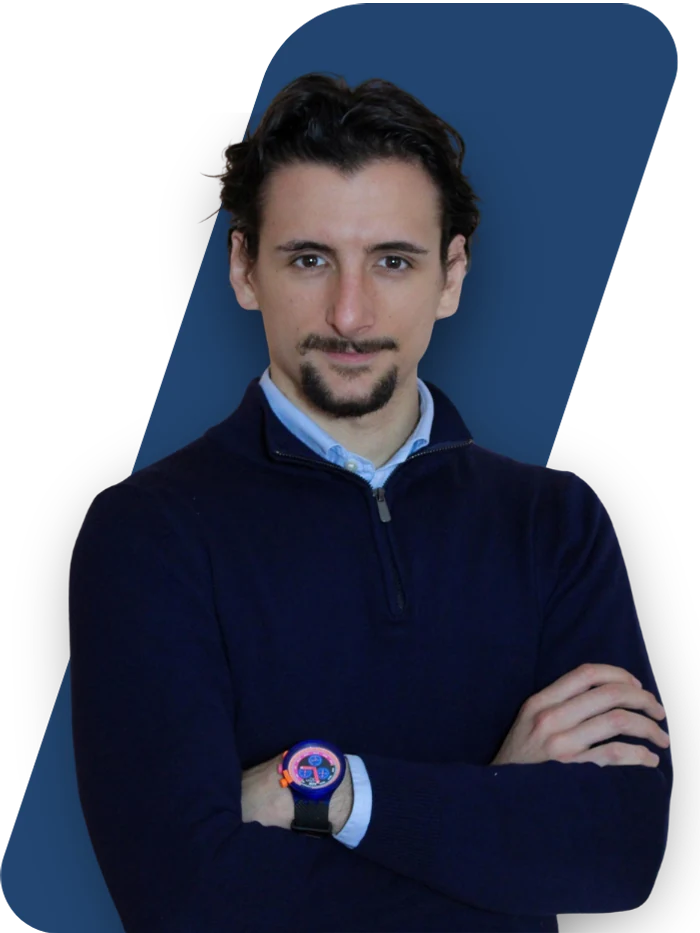
Riccardo Longato
GMP Pharmaceutical Quality Systems Lead Auditor
CQI/IRCA certified lead auditor, certificate no. LA113.
Has spoken at PTMC Lisbon, JIHE Tokyo, AIHEF Bangkok and IndicaSativa Trade Bologna.
